home gallery history learn shop muqarnas screens downloads book about links

Home Sign My Guestbook

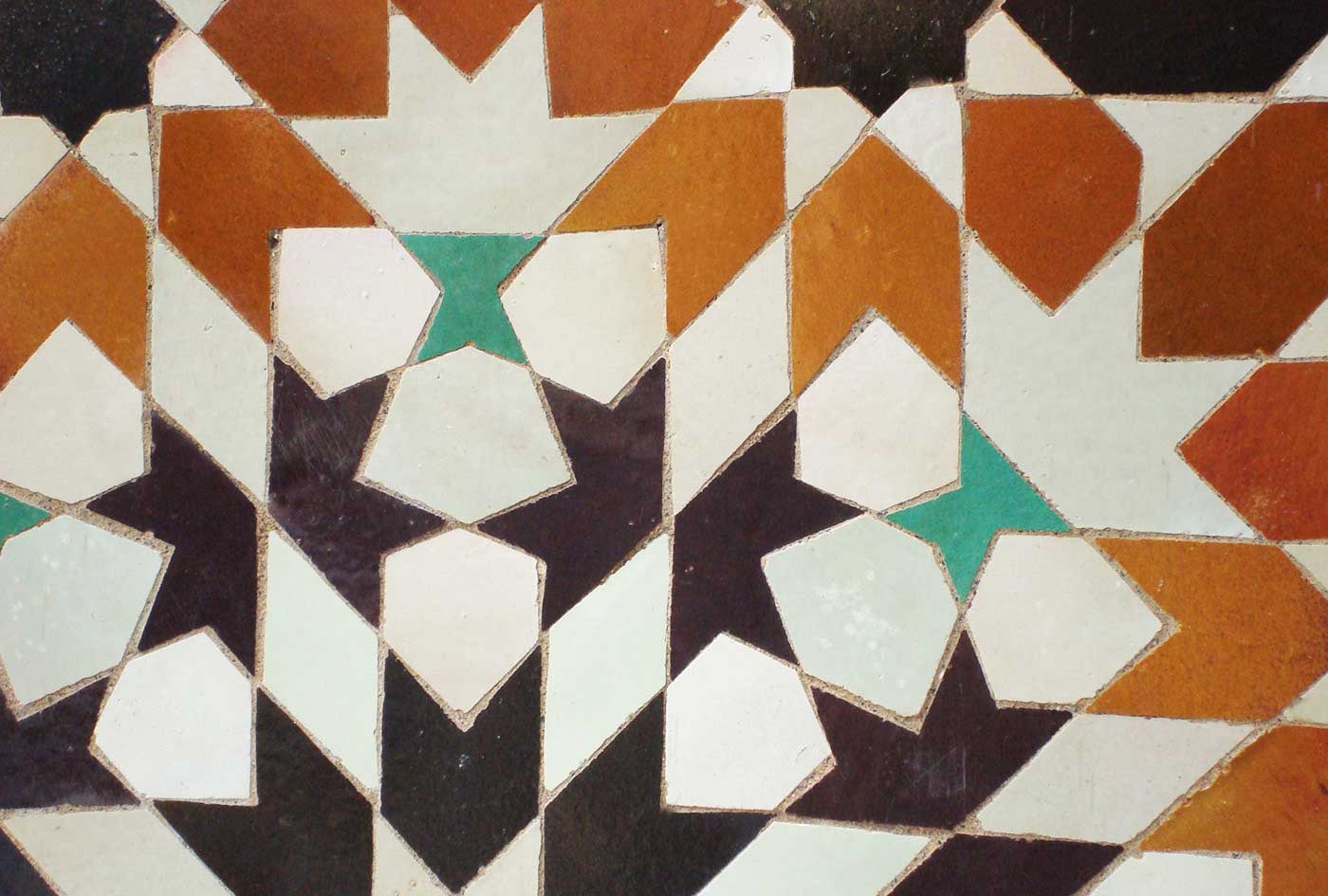
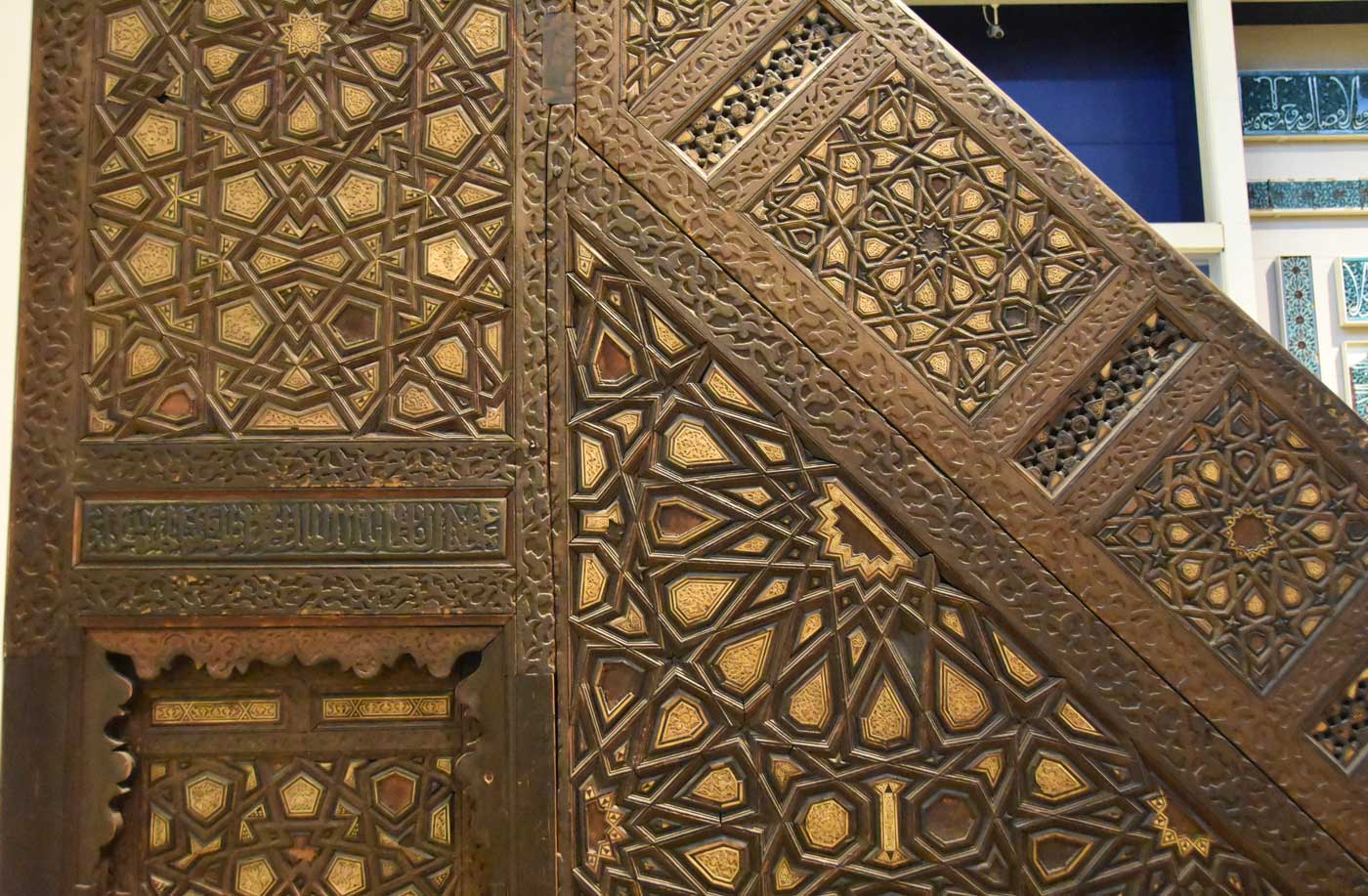
Mamluk qur'anGeometrical design is one of the most distinctive aspects of Islamic art and architecture.Geometry can be seen everywhere in the Islamic world: on buildings, in books, on tiles, on wood, on metal. The variety of modes of application of geometric design is endless. It has been practiced for centuries in all parts of the Islamic world, craftsmen have transferred their knowledge from one generation to the next. Little is known about their design techniques and how they made their geometric compositions but their designs give us a lot of information and insight.

Geometric design has traditionally been done by hand and the process of creating a composition with the same tools as traditional craftsmen have done for centuries is a good way to learn how they constructed their designs. This website shows the results of my work in the field of Islamic geometric design. The watercolour compositions in the online gallery are the result of many years of trying to make traditional designs and learning how the use of colour and vegetal forms can enhance any geometrical composition. The image on the left is a page from a 15th century Mamluk Qur'an. It demonstrates that the most accomplished designs achieve a balance between rectilinear and curvilinear forms. As in life, art is also all about balance and nowhere omre os than in traditional islamic geometrical design.

Geometrical design is essentially ageless and of all periods. This does not mean that it has to be unchanging. In the history of Islamic art and architecture different dynasties were responsible for major innnovations in the fields of arts and sciences. In geometric design the Anatolian Seljuks, the Mamluks from Egypt and the Iranian Safavids were especially innovative.

This innovative attitude has created some of the greatest accomplishments in Islamic art and architecture. This website honours that traditional yet innovative attitude to design.


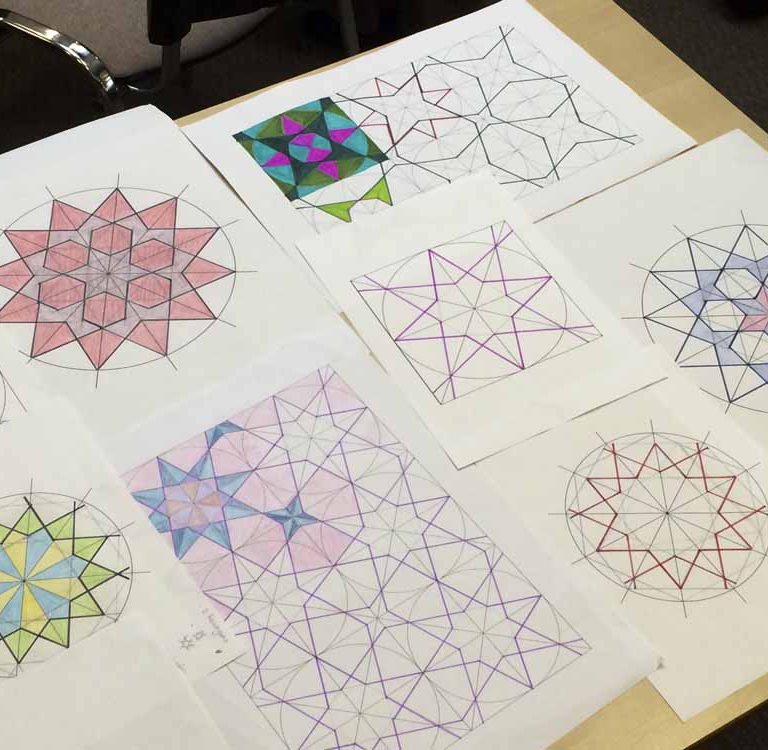
Anyone can learn how to create Islamic geometric designs. It does not require and aptitude or enthusiasm for mathematics or geometry. This website offers an extensive (and expanding) section on the educational aspects of traditional design. On-line lessons provide a useful introduction to the subject. Learn how a compass and a ruler allow you to create shapes and patterns.

The most familiar geometrical designs in Islamic art and architecture is two-dimensional. However, there is however also a field of Islamic geometrical design that is less well-known, this is the tradition of three-dimensional geometrical design, muqarnas. Muqarnas constructions were originally created to provide a smooth transition inside a building between wall and a dome. Muqarnas are unique to Islamic architecture and have been used in different ways, using different construction techniques all over the Islamic world.
They can be seen as a three-dimensonal version of two-dimensional geometric design. Their construction methods are intriguing but less complex that they would seem. As with two-dimensional design, a compass and a ruler are all that is needed for muqarnas design. A page dedicated to muqarnas and their construction is here.

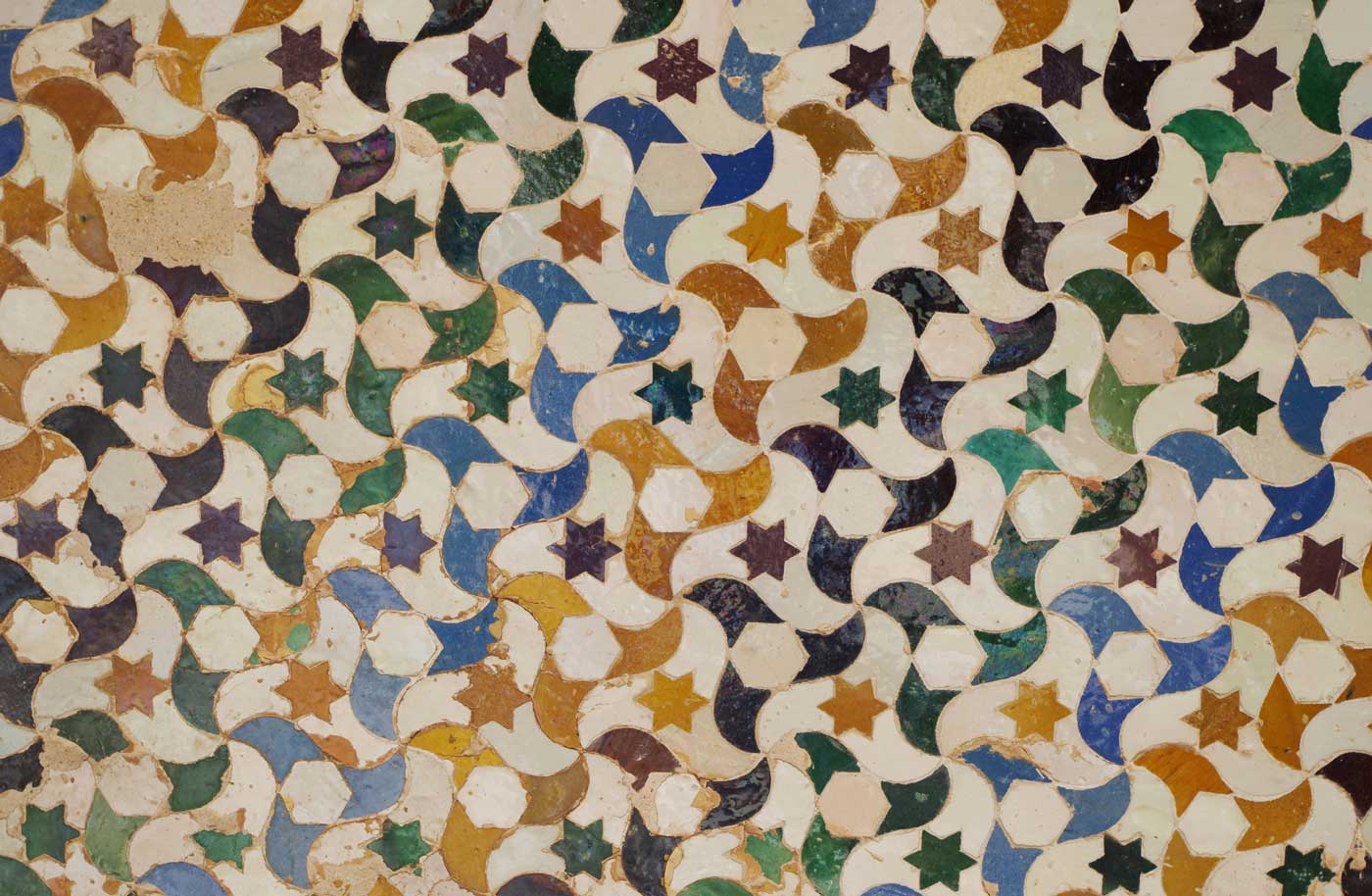
A defining characteristic of Islamic geometrical design is that the patterns usually repeat themselves. As the on-line lessons show, a design drawn in a square can be tiled to create an infinite pattern. This tradtional design principle has been employed to provide a range of free  downloadable wallpapers for on pc monitors.